
In a world where self-sufficiency and long-term food storage are becoming increasingly valuable, owning a home freeze dryer is no longer just for the serious prepper—it’s for the home gardener, the savvy bulk buyer, and the health-conscious family. Harvest Right Models has dominated this market for over a decade, selling more than 450,000 units and continuously innovating their line-up .
But with great options comes great confusion. Should you buy the Small, Medium, Large, or XL? What is the deal with the Premier vs. Oil-Free pump? How long does a batch actually take?
We’ve analyzed the latest specifications, user reviews, and technical data to answer the exact questions ,Here is everything you need to know to make the right choice in 2026.
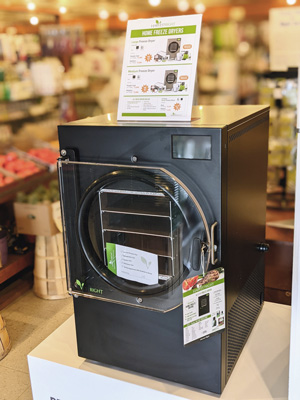
At a Glance: Harvest Right Models Lineup
Before diving into the nuances, here is a quick overview of the four main models available today. Harvest Right Models has refined these sizes to fit everything from a tiny apartment kitchen to a full-scale homestead operation.
We’ve compiled the most common questions regarding Harvest Right models to help you navigate your purchase.
1. “What is the actual difference between the Harvest Right Medium and Large?”
This is the most common crossroads for buyers. The choice boils down to volume and electrical requirements.
- Harvest Right Medium: This unit is the sweet spot for most homes. It runs on a standard 110-volt outlet, meaning you can plug it into your regular household electricity without an electrician . It holds about 7–10 lbs of fresh food per batch. If you have a typical backyard garden or like to buy in bulk for a family of four, the medium will keep your pantry stocked without dominating your utility room .
- Harvest Right Large: The large model is a step up in power. It requires a dedicated 220-volt circuit (like your washer or dryer uses) . The payoff is massive capacity: 10–16 lbs per batch. This allows you to process an entire deer harvest or a weekend’s worth of farmers market hauls in significantly fewer cycles.
2. “How much food can I really fit in one batch?”
Capacity isn’t just about pounds; it’s about what you are drying. A batch of light, fluffy loaves of bread will weigh less than a batch of dense meat, but they take up similar space.
- Small Model: Equivalent to about 1.5 to 2.5 #10 cans (the big cans like restaurants use) per batch .
- Medium Model: Can handle roughly 1.5 to 2.5 gallons of volume . Think of it as processing a full laundry basket of fresh strawberries at once.
- Large & XL: These are designed for serious throughput. The Large can handle 180–240 servings per batch, while the XL pushes that to 240–384 servings .
3. “Which pump should I choose? Premier (Oil) vs. Oil-Free?”
Your pump is the heart of the freeze dryer, and Harvest Right offers two distinct paths.
- Premier (Oil) Pump: This is the industrial-grade standard. It pulls the strongest vacuum and is generally quieter . The trade-off? Maintenance. You need to change the oil every 30 to 40 batches . However, with Harvest Right’s oil filtration system, this is a quick 5-minute job, and the oil lasts much longer than competitor pumps .
- Oil-Free Pump: This is the “set it and forget it” option. There is no oil to change, which is a huge selling point for those who dislike maintenance . However, these pumps often cost more upfront and can run slightly hotter .
Expert Tip: If you plan to run the machine constantly (like during harvest season), the Premier Pump is often preferred for its durability and performance. If you are a casual user who wants minimal fuss, the Oil-Free Pump is a fantastic luxury .
4. “How long does a freeze-drying cycle take?”
Patience is a virtue in freeze-drying. You are asking a machine to perform a sophisticated scientific process (sublimation) in your home.
Generally, a cycle runs between 20 to 40 hours . However, this varies wildly based on:
- Moisture Content: Water-rich foods like watermelon or tomatoes take longer than cooked chicken.
- Load Size: A full medium machine takes longer than a half-load.
- Room Temperature: The machine works best in a cool room (60-75°F). If your garage is hot, the cycle extends .
5. “Is it expensive to run?”
Once you get past the initial sticker price, the operating cost is surprisingly low. Most users report that a batch costs only a few dollars in electricity . When you compare the cost of buying commercially freeze-dried food (which can be exorbitant), the machine pays for itself over time, especially if you are preserving high-value items like organic berries or grass-fed meat.
6. “Harvest Right vs. the Competition: Why is it so popular?”
You might see other brands like Stay Fresh or Kalstein. Here is why Harvest Right remains the king:
- Experience: They invented the home freeze-drying category over a decade ago .
- Support Network: They have over 6,000 support technicians in the US. If something breaks, help is a phone call away, potentially even a home visit—a luxury competitors can’t offer .
- Value: When you compare apples to apples (matching pump quality), a Harvest Right medium is often priced $1,800 less than competing brands with inferior specs .
The Verdict: Which Harvest Right Models is for You?
- Choose the Small if you have limited counter space, are cooking for 1-2 people, or want to dip your toes into freeze-drying without a massive commitment .
- Choose the Medium if you are a standard family. It fits on a counter, plugs into a wall, and gives you enough output to make a real dent in your food storage .
- Choose the Large or XL if you are a power user. If you hunt elk, have a massive garden, or want to prepare for emergencies by the year, the extra capacity and faster throughput of the 220V models are worth the space and electrical upgrade .
No matter which you choose, you are investing in a machine that can preserve food for up to 25 years, retaining 97% of its nutrients. That’s a win for your wallet, your health, and your peace of mind.